
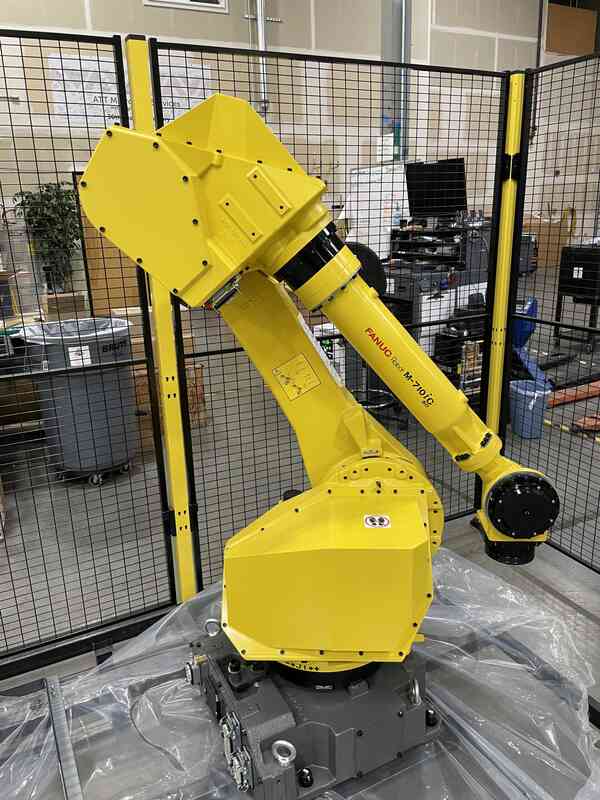

In today’s industrial landscape, automation plays a pivotal role in improving productivity, precision, and operational efficiency. Fanuc robots are widely recognized for their reliability and versatility, making them a preferred choice across manufacturing sectors, including automotive, electronics, and logistics. However, unlocking the full potential of these robots requires expertise from professional Fanuc robot integrators who specialize in programming, customization, and seamless integration into production systems. Understanding the advanced programming techniques used by these integrators reveals how businesses can optimize robotic performance and achieve significant gains in efficiency and quality.
Fanuc robot integrators leverage a combination of software, control systems, and programming protocols to ensure that robots perform complex tasks with precision. Unlike standard programming approaches, advanced techniques go beyond simple point-to-point motion instructions, enabling robots to handle intricate assembly, material handling, welding, and inspection tasks. Integrators analyze production requirements and design tailored programs that align with specific operational goals. This approach ensures maximum efficiency and minimizes downtime in automated processes.
Fanuc Robot Integrators: Offline Programming and Simulation
One of the most effective techniques employed by Fanuc robot integrators is offline programming and simulation. This method allows integrators to create, test, and optimize robot programs on a computer before deploying them on the actual production line. Offline programming reduces production disruptions, as robots can continue normal operations while new programs are developed and refined.
Simulation software provides a virtual environment where integrators can visualize robot motion, detect potential collisions, and optimize task sequences. This approach not only enhances safety but also improves cycle times by identifying bottlenecks and inefficiencies in the program before implementation. Offline programming and simulation are particularly valuable for complex systems where multiple robots operate simultaneously or where precision is critical.
Structured and Modular Programming
Fanuc robot integrators also use structured and modular programming techniques to improve code maintainability and flexibility. Structured programming organizes instructions into logical blocks, making it easier to understand, debug, and modify programs. Modular programming goes a step further by dividing tasks into reusable subroutines or modules, allowing integrators to implement changes without rewriting the entire program.
This technique is especially beneficial for production environments that require frequent adjustments or product changes. For example, in an automotive assembly line, modular programming enables integrators to quickly reconfigure robot tasks to accommodate different vehicle models or components without extensive downtime. It also simplifies troubleshooting, as specific modules can be isolated and tested independently.
Motion Optimization and Path Planning
Efficient motion planning is another advanced programming strategy employed by Fanuc robot integrators. Optimizing robot paths ensures minimal movement, reducing cycle times while maintaining precision. Integrators analyze trajectories, joint velocities, and acceleration patterns to achieve smooth and efficient motion.
Path planning techniques consider both the physical workspace and the tasks to be performed, avoiding obstacles, minimizing unnecessary movements, and preventing collisions. For complex operations such as welding or material handling, precise path planning ensures consistent quality and reduces wear on robotic components. Advanced motion optimization also contributes to energy efficiency, as robots consume less power when movements are streamlined.
Sensor Integration and Feedback Control
Modern automation demands adaptability, and Fanuc robot integrators achieve this through sensor integration and feedback control. Robots equipped with vision systems, force sensors, or proximity sensors can adjust their actions in real time based on environmental feedback.
Vision-guided programming enables robots to identify object positions, orientations, and dimensions, allowing precise handling even in dynamic environments. Force and torque sensors allow robots to maintain consistent pressure during assembly or material manipulation, preventing damage to sensitive components. Integrators program the robot controller to process sensor data and adjust movements accordingly, creating a responsive and intelligent automation system.
Also Read: Here’s How Pool Cleaning Robots Can Transform Your Life
Collaborative Robot Programming
Collaborative robots, or cobots, are increasingly integrated into manufacturing environments alongside human operators. Fanuc robot integrators utilize advanced programming techniques to ensure safe and efficient collaboration. This includes defining safety zones, setting speed and force limits, and programming task-specific gestures that avoid potential hazards.
Cobots are often used for tasks that combine human dexterity with robotic precision, such as assembly, inspection, or machine tending. Integrators leverage teach pendant programming, guided calibration, and sensor feedback to ensure smooth interaction between humans and robots while maintaining productivity and safety standards.
Custom Algorithm Development
For highly specialized applications, Fanuc robot integrators may develop custom algorithms tailored to specific production requirements. These algorithms can optimize complex motion sequences, coordinate multiple robots, or implement advanced inspection and sorting logic.
Custom algorithms often involve mathematical modeling, kinematics calculations, and control theory principles. Integrators work closely with clients to understand operational challenges and translate them into executable programs that maximize efficiency and quality. This level of customization ensures that robots perform tasks that would be difficult or impossible with standard programming alone.
Continuous monitoring and iterative improvements are part of the programming process. Integrators collect performance data from robots, identify areas for optimization, and refine algorithms to improve speed, accuracy, and reliability. This iterative approach ensures that automation systems remain effective and adaptive over time, keeping pace with changing production demands.
Advanced programming techniques by Fanuc robot integrators are critical for achieving high levels of automation efficiency, flexibility, and safety. From offline programming and modular design to sensor integration and custom algorithms, these strategies allow robots to handle complex, repetitive, or high-precision tasks reliably. Companies that invest in professional integration services benefit from optimized performance, reduced downtime, and enhanced overall productivity.
By combining technical expertise, innovative programming methods, and a deep understanding of operational requirements, Fanuc robot integrators empower manufacturers to fully leverage robotic automation. These advanced programming strategies ensure that robots are not only reliable but also adaptable, precise, and efficient, helping businesses remain competitive in an increasingly automated global market.
